
TMSI · Saudi Arabia
Stadium and Sports Roofs in ETFE and Tensile Membrane
Why membrane roofs suit sports venues
Sports roofs need long spans, daylight on the field of play and a structure that does not overload the building beneath it. ETFE is well suited to that brief: it weighs roughly 1% of an equivalent area of glass and transmits up to 95% of natural light. A single-layer ETFE panel weighs under 1 kg/m² against roughly 30 kg/m² for double glazing, and that saving carries through purlins, primary steel, columns and foundations.
ETFE does not shatter and cannot fall as sharp debris, and its tear resistance means punctures round out instead of spreading — a meaningful property over spectators.
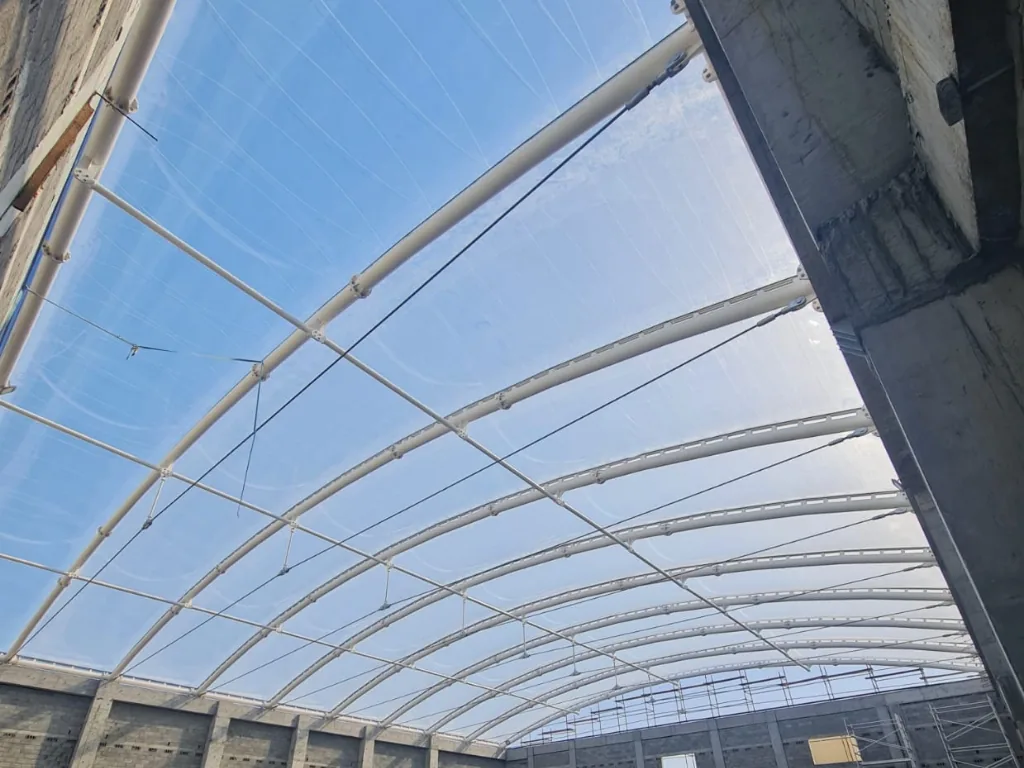
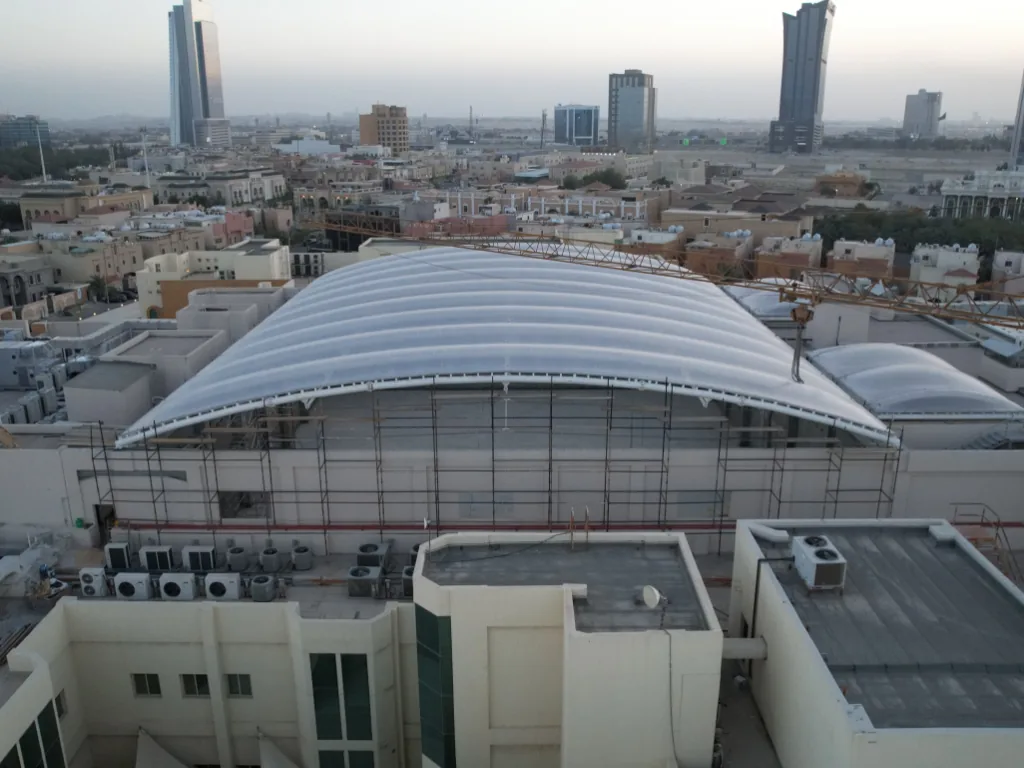
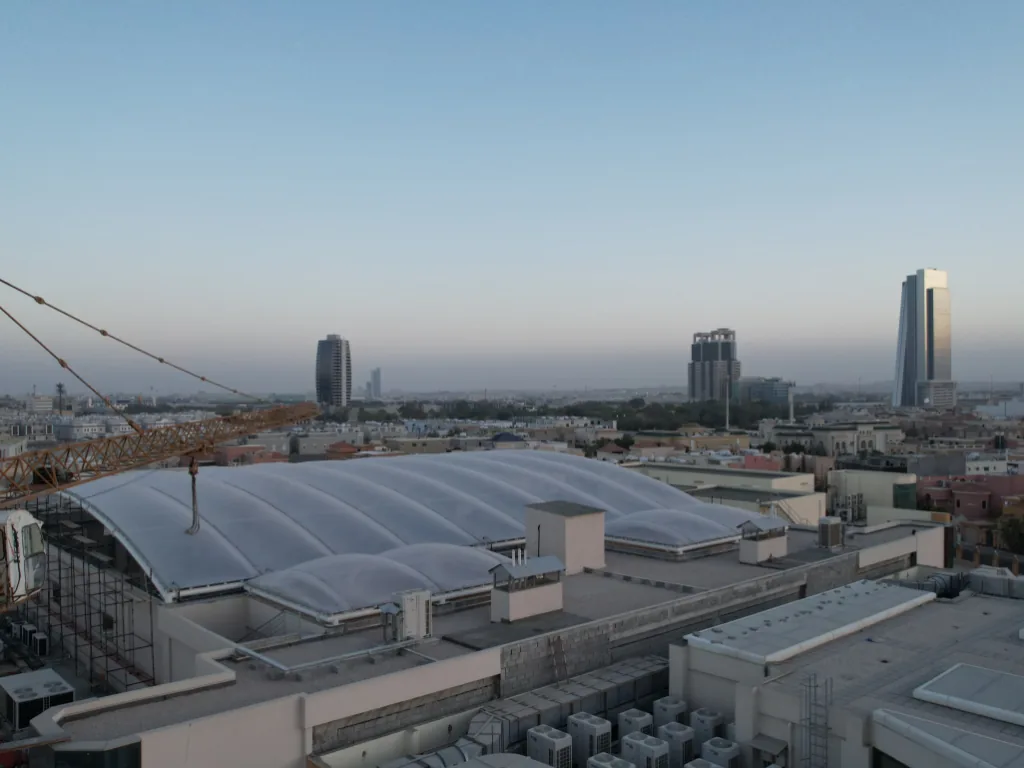
Our project: the ETFE roof at MACHS, Dammam
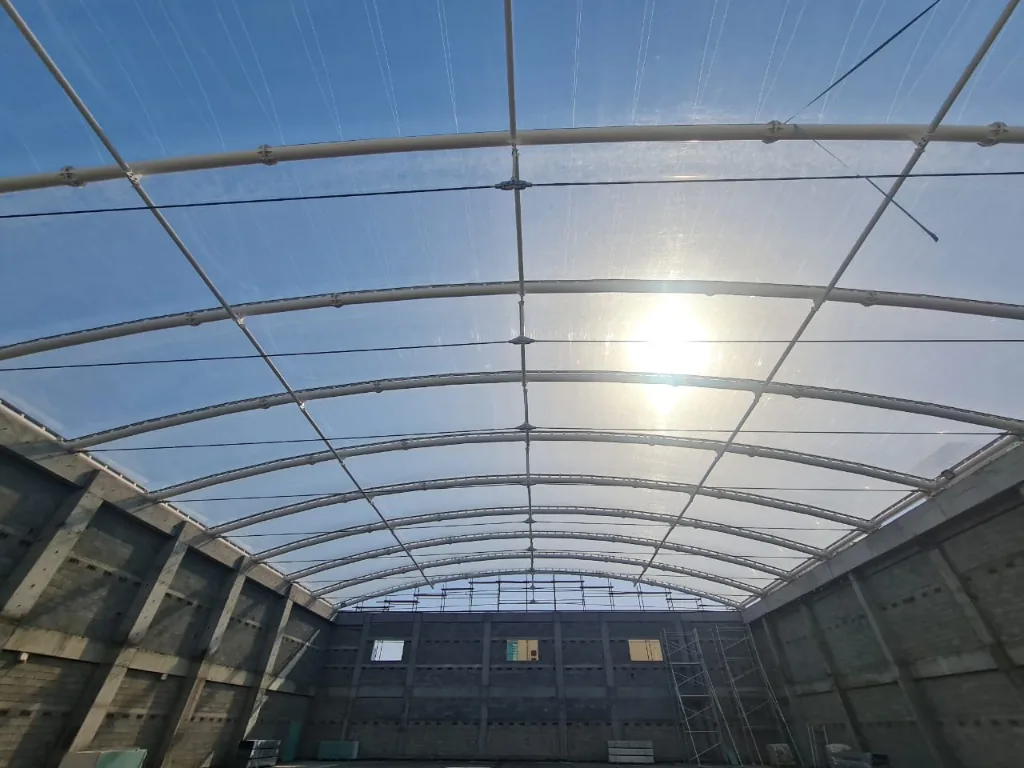
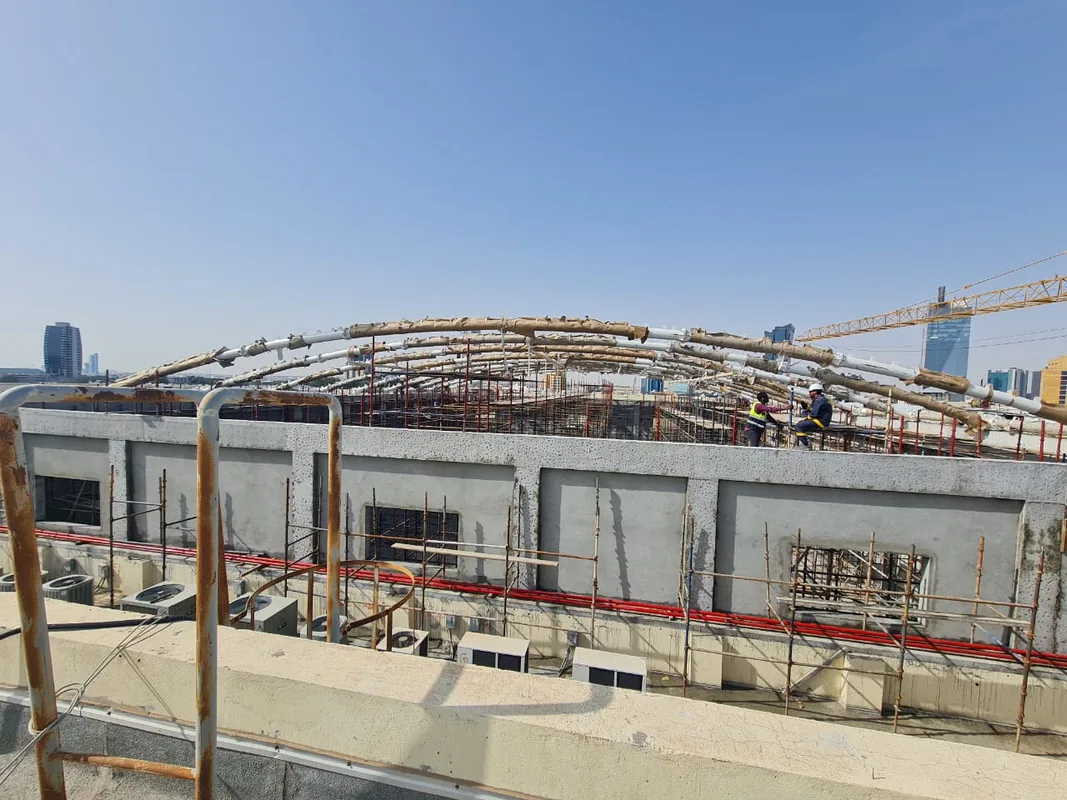
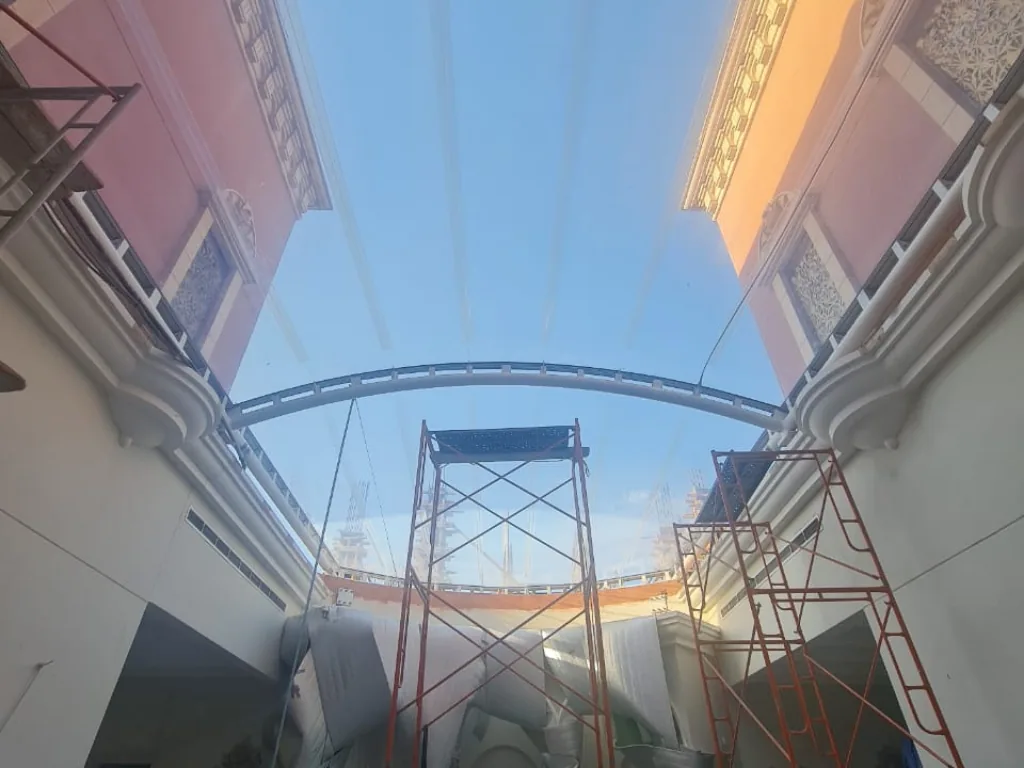
TMSI designed, supplied and installed the stadium roof at MACHS — the Mohammed Al-Mana College for Health Sciences in Dammam — completed in 2023. More than 1,500 m² of double-layer ETFE cushions sit on a rolled tubular steel arch grid, inflated to 250–300 Pa by an air handling unit with dual fans for load sharing and redundancy. The cushions give an insulating air cavity with a U-value of approximately 2.9 W/m²K.
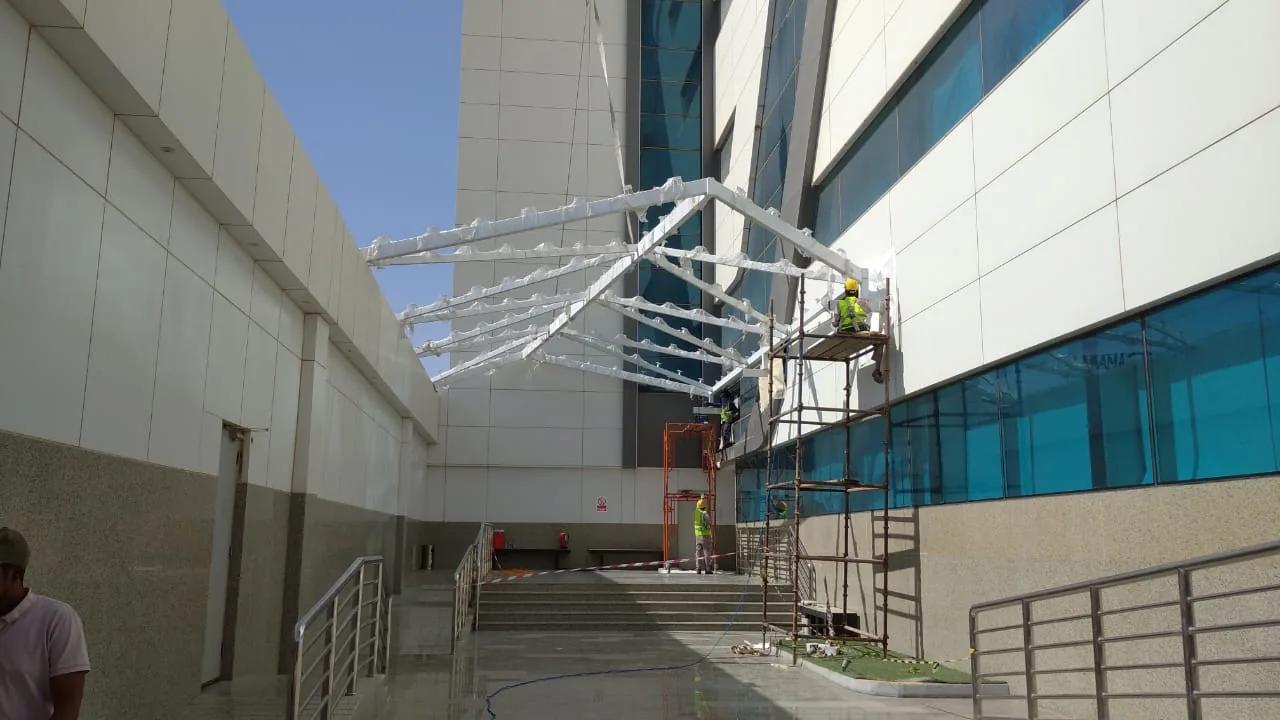
Arch geometry and cushion layout were developed together so that no rectangular cushion exceeds the 3.5 m guideline span, analysed for Dammam wind and thermal load. The arches were rolled, welded and trial-assembled in our factory, re-assembled at ground level beside the building and lifted complete. Each cushion was test-inflated before dispatch, and individual cushions can be replaced without disturbing the rest of the roof.
MACHS is currently our only completed sports roof, and we present it in full detail on its project page.
What a sports roof has to get right
Solar gain: daylight is plentiful in Saudi Arabia, so the design question is how much heat comes with it. We tune it with silver fritting, tinted or matt foils and additional cushion layers, and fix the targets early because the frit is printed before panels are cut.
Acoustics and rain: ETFE is acoustically transparent, but rain noise on cushions can be noticeable. A rain suppression layer reduces it by up to 10 dB and can be retrofitted. Drainage is designed with curvature and, as a rule, at least a 10° perimeter slope so water cannot pond.
Wind, smoke and fire: wind loading is site-specific to the Saudi Building Code, ASCE 7 or EN 1991-1-4 as specified, verified by non-linear finite element analysis. Louvres or opening panels can be built into the ETFE field for ventilation and smoke control. ETFE foil is self-extinguishing and produces no flaming droplets.
Tensile shade for stands and outdoor courts
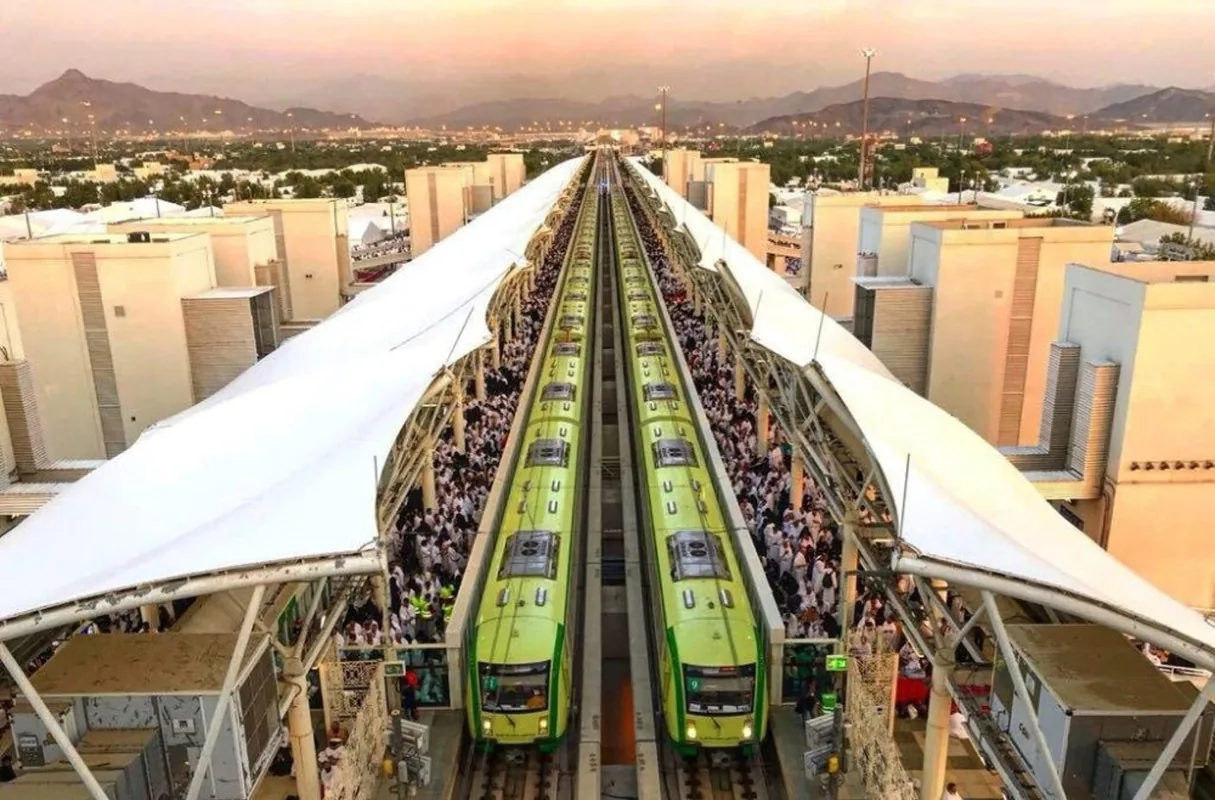
Not every sports facility needs a transparent roof. For spectator stands, walkways and outdoor courts, a tensile membrane in PTFE or PVDF can provide shade instead. PTFE glass-fibre membrane is built to last decades with minimal maintenance; PVDF-coated fabric combines long-term UV resistance with architectural flexibility. We design, manufacture and install both in-house, as we do with ETFE.
Related projects
Frequently asked questions
Why use ETFE for a stadium roof?
ETFE combines very low weight with high daylight. It weighs about 1% of equivalent glass and transmits up to 95% of natural light, so steel, columns and foundations can be lighter and spans longer. It does not shatter, is self-extinguishing, and its solar gain can be controlled with fritting, tinted foils and extra cushion layers.
Has TMSI built a sports roof?
Yes. TMSI designed, supplied and installed more than 1,500 m² of double-layer ETFE cushions on a rolled tubular steel arch roof at MACHS in Dammam, completed in 2023. The cushions are inflated to 250–300 Pa by a dual-fan air handling unit and give a U-value of approximately 2.9 W/m²K.
Is rain noise a problem under an ETFE cushion roof?
It can be noticeable in heavy rain, but it can be controlled. A rain suppression layer tensioned over the upper surface acts as a damper and reduces noise by up to 10 dB. Because it can be retrofitted, we recommend assessing the space in use before committing to it.
How long does an ETFE roof last?
ETFE has a service life of more than 30 years, estimated at 50 years, as a generic property of the material. It is unaffected by UV and heat and has a self-cleaning surface. Project-specific performance figures are confirmed at design stage against the selected foil, layer build-up and print coverage.
Planning a sports roof or spectator shade? Send us the span, the city and the use, and we will propose a system and an indicative budget.
Send us the area, the city and the fabric you need — we come back with a system and an indicative budget.