
ENGINEERING BASIS
Design Criteria & Compliance
Every TMSI ETFE roof is engineered for its specific location, exposure and geometry. Nothing is taken from a catalogue: foil thickness, layer count, cushion size, cable diameter and steel sections are all outputs of the analysis for that project.
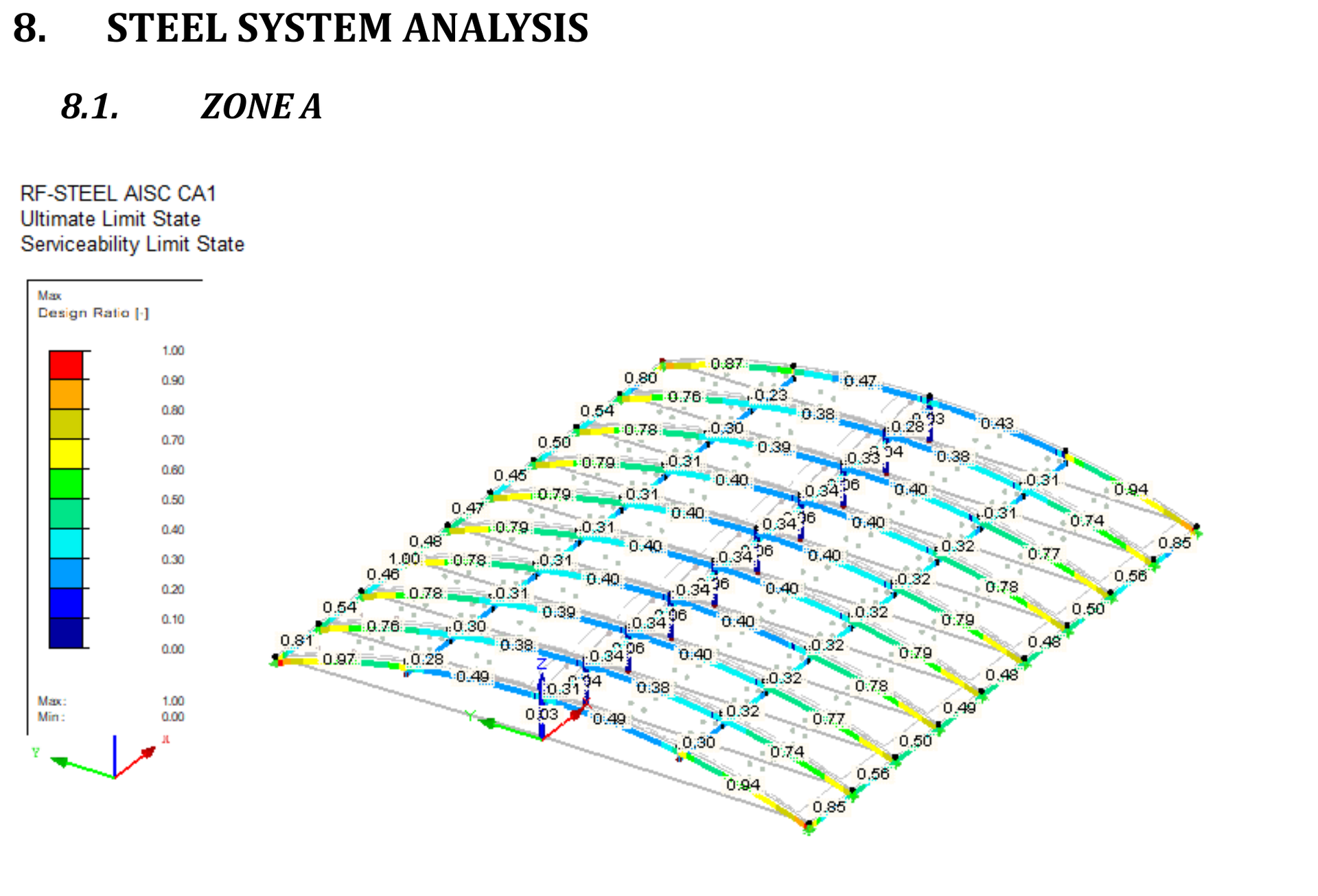
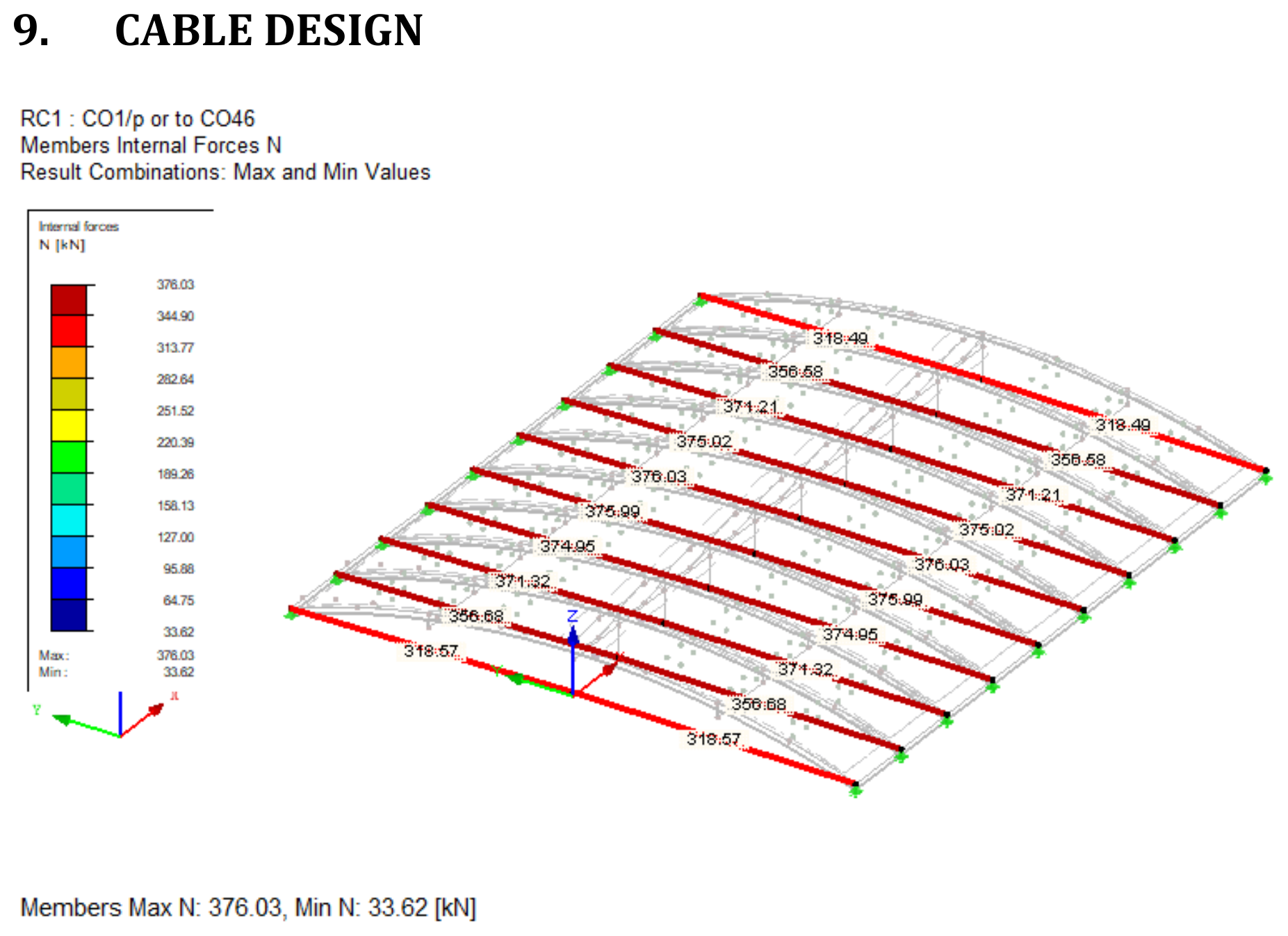
Loading & Analysis
| Wind loading | Site-specific, to the Saudi Building Code / ASCE 7 or EN 1991-1-4 as specified |
|---|---|
| Snow loading | EN 1991-1-3 where applicable to the location |
| Thermal | Full Gulf ambient range, including the effect on cushion pressure |
| Pre-stress | Set by form-finding; verified against deflection limits |
| Method | Non-linear finite element analysis of the membrane, cables and supporting structure |
| Deliverables | Calculation report, shop drawings, material certificates |
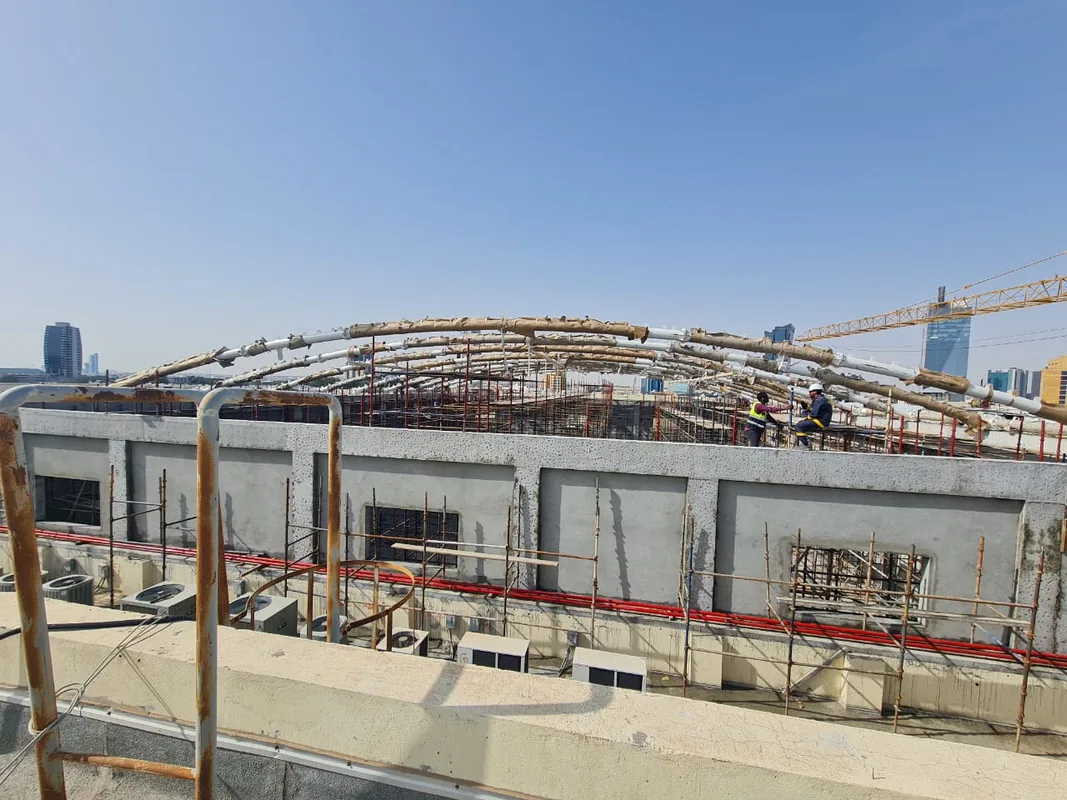
Access & Fragility
ETFE cushion assemblies are classified as a non-fragile Class C roof assembly under ACR(M)001. Class C is the lowest non-fragile class, so the following applies on every project:
- The assembly is never intentionally walked on; temporary access equipment such as crawling boards is always used
- Any impact — including a trip or stumble — triggers inspection, and the panel is treated as fragile until inspected or replaced
- Adjoining panels may also have become fragile and are treated the same way
- Rescue plans are prepared before work starts and the workforce is briefed on them
Technical Considerations for ETFE
TMSI manages all critical technical considerations inherent to ETFE system delivery, from film handling and cushion inflation to clamp plate interfaces and drainage compliance.
CUSHION GEOMETRY & AIR PRESSURE
Cushion geometry is coordinated with structural geometry and inflation systems. Air pressure monitoring ensures cushion integrity, thermal performance, and structural response under load.
FILM HANDLING & ORIENTATION
ETFE film requires careful handling to avoid surface damage. Correct orientation of printed or clear films is verified prior to installation to ensure performance and aesthetic compliance.
CLAMP PLATE INTERFACES & THERMAL MOVEMENT
Clamp plate details are reviewed for compatibility with ETFE film edges and extrusion profiles. Thermal movement allowances prevent stress concentrations and film damage.
DRAINAGE, SEALING & WIND LOAD
Drainage paths, perimeter sealing, and wind load resistance are coordinated with structural and waterproofing trades. Maintenance access is incorporated during planning.
Rainwater & Drainage
All surfaces are designed with curvature so that water and debris cannot pond — ponding deforms the foil and adds load the panel was not designed for. Rainwater is channelled to the perimeter and collected in the main gutter system. As a general rule we design to a minimum 10° slope at the perimeter; shallower geometry is possible but is combined with additional restraint and, in snow regions, sensors.
Acoustics
ETFE is acoustically transparent — it neither helps nor harms room acoustics. Rain noise on a cushion roof can, however, be noticeable. Where this matters a rain suppression layer tensioned over the upper surface acts as a damper, reducing noise by up to 10 dB in heavy rain. It can be retrofitted, so we recommend assessing the space in use before committing to it.
Ventilation & Smoke
Where heat build-up is a concern, perimeter louvres or actuated opening panels can be built into the ETFE field itself, operated manually, by the BMS on temperature, or by the fire alarm as part of the smoke ventilation strategy.
ETFE projects delivered
Planning an ETFE roof? Request a quote
Send us the area, the city and the fabric you need — we come back with a system and an indicative budget.