
DAYLIGHT WITHOUT THE HEAT
Solar Control & Fritting
ETFE transmits light generously — which is the point of it, and also the risk. In the Eastern Province the design question is never whether enough daylight will arrive, but how much solar energy comes with it. The G-value describes that energy transfer: expressed between 0 and 1, the higher the figure the more heat passes into the space below.
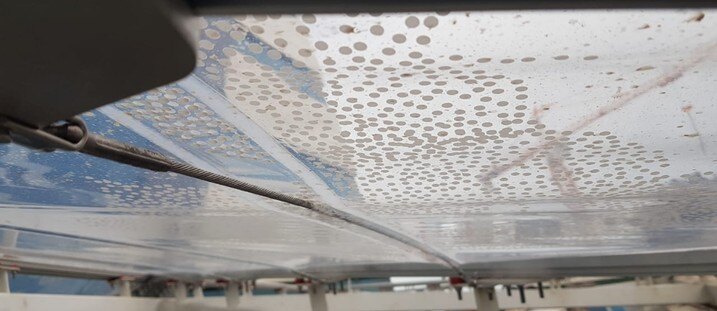
Solar gain is not simply reduced; it is engineered. Four levers are available, and they are usually combined rather than used alone.
- 01Silver frittingA reflective pattern printed onto the outer foil. Varying the coverage percentage and ink density tunes light and energy transmission independently — the panel stays visually translucent.
- 02White or matt diffused foilScatters incoming light, cutting glare and hot-spotting. Often used on the outer layer of a cushion with clear foil below.
- 03Tinted solar-control foilPurpose-made foils that reduce transmitted energy across the spectrum while holding a neutral appearance.
- 04Additional cushion layersA third or fourth foil adds an insulating air cavity, lowering the U-value and giving another printable surface.
Standard Frit Patterns
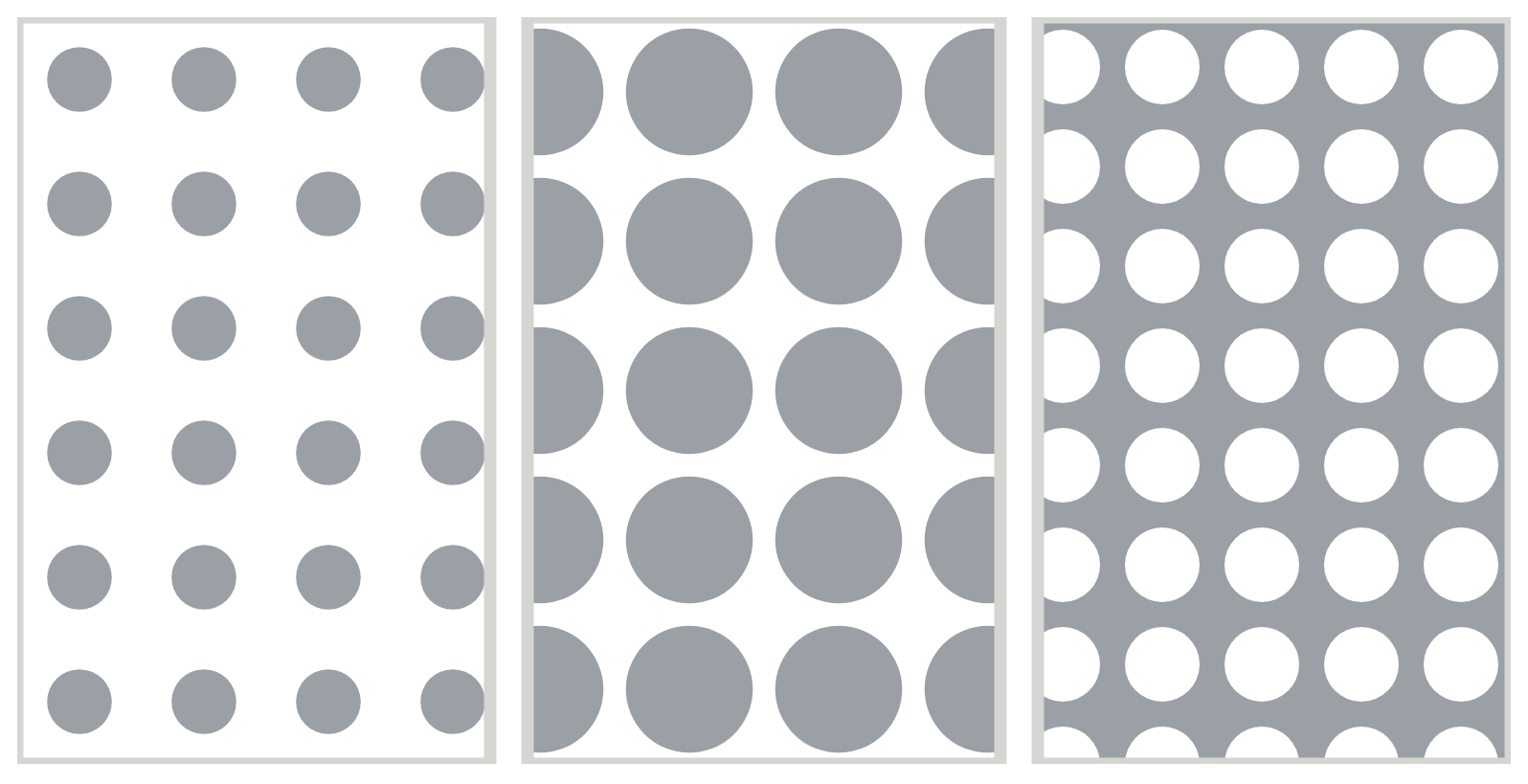
Indicative standard patterns — dot, high-coverage dot and reverse dot. Coverage density is selected to hit the specified transmission.
Custom Printing
Where a project has a specific performance or aesthetic requirement, fully custom patterns, gradients, logos and full-colour graphics can be printed onto the foil.
Setting the Target Early
Frit coverage has to be fixed before patterning, because the pattern is printed on the roll before panels are cut and welded. Agreeing the light transmission and G-value targets at design stage — ideally against a thermal model of the space — avoids the most expensive change that can be made to an ETFE package.
ETFE projects delivered



Planning an ETFE roof? Request a quote
Send us the area, the city and the fabric you need — we come back with a system and an indicative budget.