
CONTROL & MONITORING
Control, Monitoring & Power Resilience
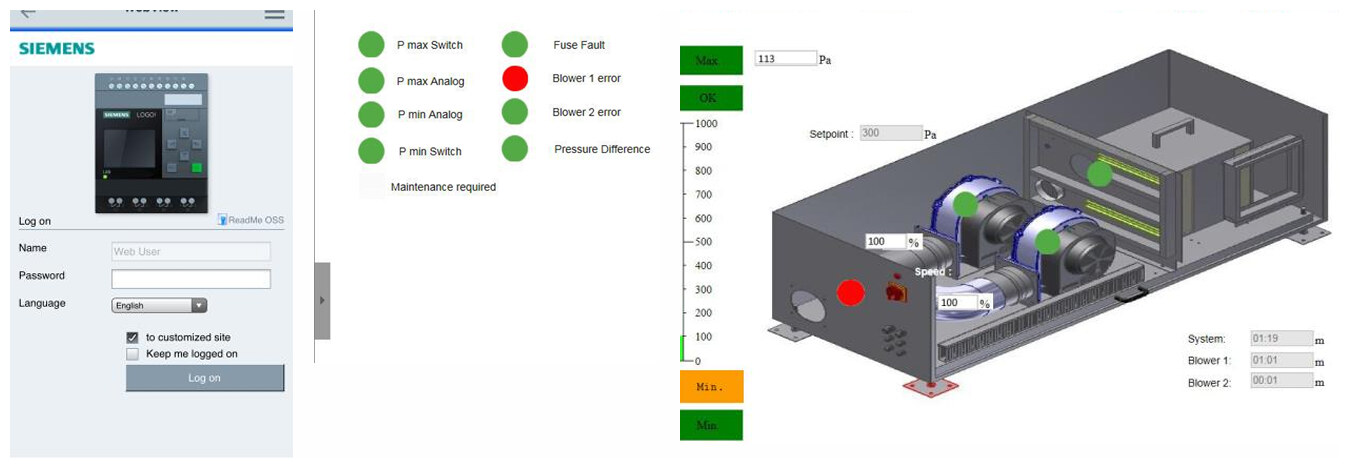
Cushion pressure and system health are monitored continuously and reported through a simple status system, mirrored to the building management system. The control system reacts before it reports: if pressure falls, airflow to the cushions is increased automatically while the fault is logged and displayed.
Status system
Loss of power — standby supply must be designed in
Non-return valves hold the cushions inflated for approximately 3 to 6 hours after a power failure, depending on weather. Beyond that, falling pressure leaves the roof exposed to wind damage, so we recommend that standby power provision is included in the building’s electrical design.
Master control unit & network
Individual application designs — two, three or four-layer pillows combined with the unique environmental circumstances of each site — call for advanced system combinations. For complex roofs where several units work together, we specify a master control system that unifies monitoring and editing into a single interface.
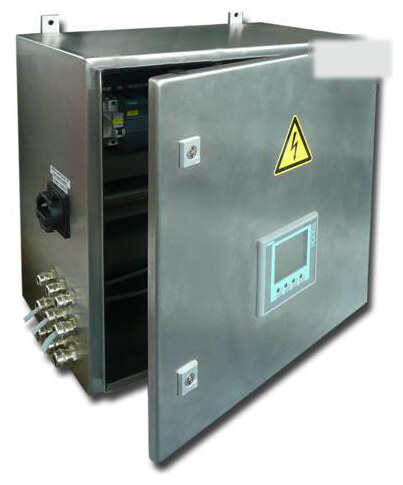
MASTER CONTROL UNIT
An individual switchboard cabinet with a programmable logic controller, touch-screen editing and visualization, and interfaces for every connected air supply unit and applicable sensor or valve. It communicates over Ethernet with networked units and can drive an external touch-screen terminal in a remote control room. Only the master unit offers a BACnet interface to exchange live data with the building management system.
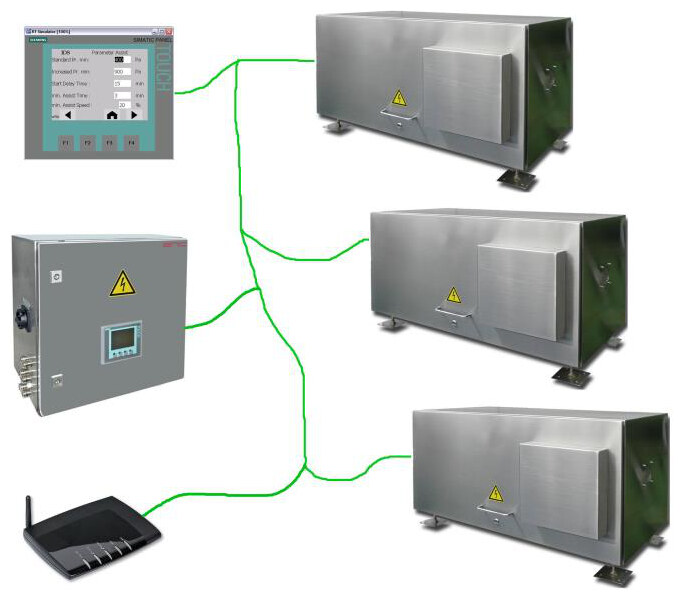
NETWORK FEATURE
Each unit can be supplemented with an Ethernet network module, linking it to other units and to the master control terminal. Weather sensors and certain building management systems can also join the network. Over long distances, repeaters extend the signal with effectively no length restriction, and remote access is available.
Wireless, web and BMS access
Remote visibility into system status is available at several levels, from a weather-resistant wireless access point through to a full building-management integration.
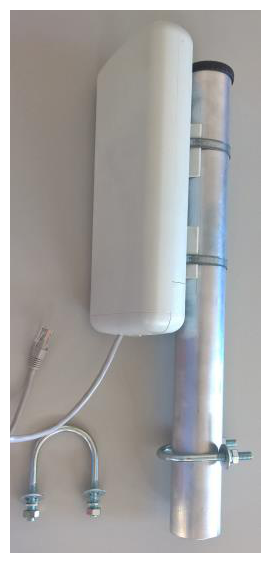
WIRELESS ACCESS POINT
A password-protected wireless access point lets any device within range — phone, tablet or laptop — view and control the unit’s display remotely, without a wired connection.
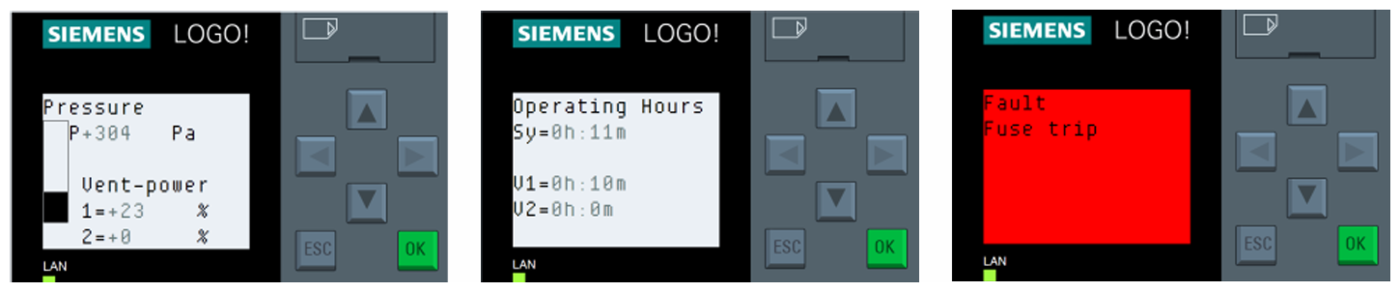
WEBSERVER CONTROL
A browser-based interface shows live data from the unit’s logic controller on any LAN-connected device, including real-time status, diagnostics and error pages in a customised, professional layout.
BMS signal interface
Every unit is fitted as standard with a dry-contact socket providing five status and failure signals to the building management system; the master control unit extends this to four potential-free contacts per connected unit, optionally with a BACnet interface.
Remote access, alerts & air filtration
A set of practical options extends the standard unit for remote support, unattended alerting, and cleaner operation in demanding site conditions.
REMOTE ACCESS FEATURE
Worldwide remote access to the master control display via modem, letting specialists check operation, failure and preset parameters in parallel with the on-site control panel — requires a master control system with internet access.
SMS & EMAIL ALERT INTERFACE
An optional SMS or email module sends alert messages to designated phones or addresses at any time on system status changes; a battery-backed version keeps sending alerts through a power failure, and a status-request mode is also available.
HUMIDITY SWITCH
Turns off the dehumidifier’s regenerating-air heater — its most power-hungry element — once relative humidity drops below a preset value, saving energy on standard units and included as standard on our larger and ECO units.
AIR FILTER CASSETTES
A replaceable filter cassette behind each unit’s protective cover keeps atmospheric pollution from fogging or contaminating the pillows; standard G4 filters can be upgraded to fine filters for high-pollution regions, with at least half-yearly inspection.
Snow & wind sensors
ETFE roofs must respond safely to changing environmental loads. TMSI specifies sensor packages — three types of snow sensor, a combined weather station, and a wind sensor — that let the air supply system automatically raise cushion pressure under snow or wind loading.
SNOW DETECTION SENSOR
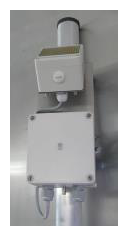
Gives a digital signal when moisture appears on the sensor; combined with a below-3°C reading, the control unit raises air throughput to the preset maximum. Not recommended for areas of high snow load with long dry spells.
SNOW HEIGHT SENSOR
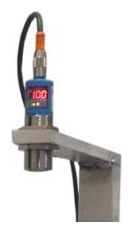
Ensures precise, stepless snow measurement from 1 to 80 cm, working without interference in fog or precipitation. The reading is transmitted as an analogue value and converted linearly into a proportional pressure increase.
SNOW SCALES
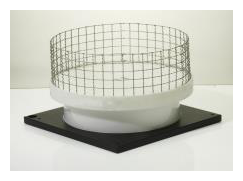
A measuring unit with a single load cell determines the exact weight of snow sitting on the roof — open grid construction also lets it detect snow drift. The measured load is converted into pressure, proportionally.
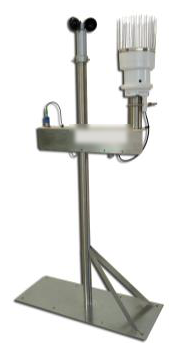
COMBI WEATHER STATION
Combines wind speed, snow depth, precipitation, temperature and humidity sensing in one mast-mounted unit. The processed weather data lets the control system react in real time from every angle.
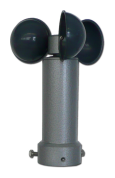
WIND SENSOR
Provides continuous wind-speed data so the control unit can raise internal pressure under heavy wind loading, while filtering out short gusts. Heated for winter operation, with stainless steel bearings and fixings.
Power resilience & shading support
Beyond standard operation, TMSI offers power-resilience options and a motorised shading feature for projects that need it.
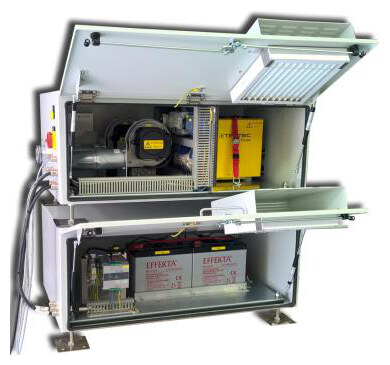
DUAL POWER SOURCE & UPS
An automatic dual power-source switch connects a unit to two independent supplies — such as a backup transformer or emergency generator. A made-to-order UPS can also be fitted to hold pressure steady through a power interruption. A 110/115V, 50/60Hz supply option is available across the ECO range and on our larger standard units.
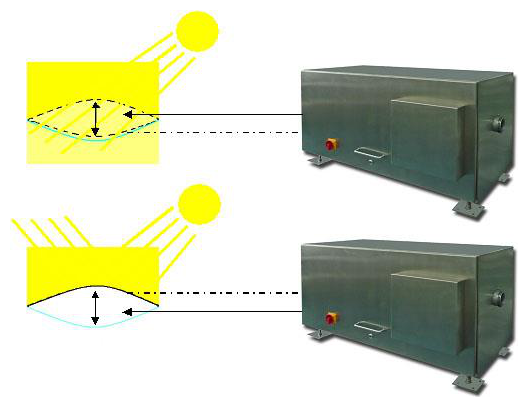
SHADING SUPPORT
For three-layer pillows, an intelligent combination of valves and a second pipe swings the middle printed layer up or down to overlap patterns and provide shade. The system briefly closes a circuit to move dry air from one chamber to the other, so no additional drying is needed — and a light sensor can trigger it automatically. Not applicable to ECO units.
Project questionnaire
TMSI uses this questionnaire to confirm the correct air supply configuration for a project. Sharing these figures early — alongside architectural plans and sections — lets us return an accurate specification and budget.
Roof & facade pillows
- Total pillow area & volume (m² / m³)
- Max. wind & snow load (Pa)
- Pressure — standard & max. (Pa)
- Number, max. area & volume of single pillows
- Number of layers · movable shading layer (Y/N)
- Estimated leakage rate (%)
Options & extras
- Touch display, web server, master control unit
- WAP antenna · SMS / email alert interface
- Snow / rain / wind sensors · weather station
- Humidity switch · spare filter classes (G4/F5/F7)
- Cable lengths · UPS · dual power switch · voltage option
- Project name, number & location · required delivery date
Choosing an air supply unit? Talk to our engineers
Technical consultation to select the right air supply unit for your project.